
We offer more than 75 crushed stone products available in a variety of colors, sizes, and gradations.
Beyond Price + Specifications: Why Cement Performance Matters to Concrete Producers
When evaluating a bulk cement supplier, price, availability, and product specifications are often at the top of the list. And for good reason. Ready-mix concrete producers need a reliable supply of cement that meets project requirements and supports consistent production.
But there’s another consideration that can have a significant impact on the customers they serve: how that cement performs in the field.
Two cement products can meet the same industry specifications while exhibiting different performance characteristics in a concrete mixture. Those differences can influence setting behavior, early strength development, and the timing of critical construction activities.
For ready-mix producers, understanding those differences can help them deliver concrete that meets specifications while also supporting their customers’ productivity.
What Cement Performance Means on the Jobsite
For contractors, concrete performance is measured throughout the construction process, from placement and finishing to strength development and the timing of subsequent work.
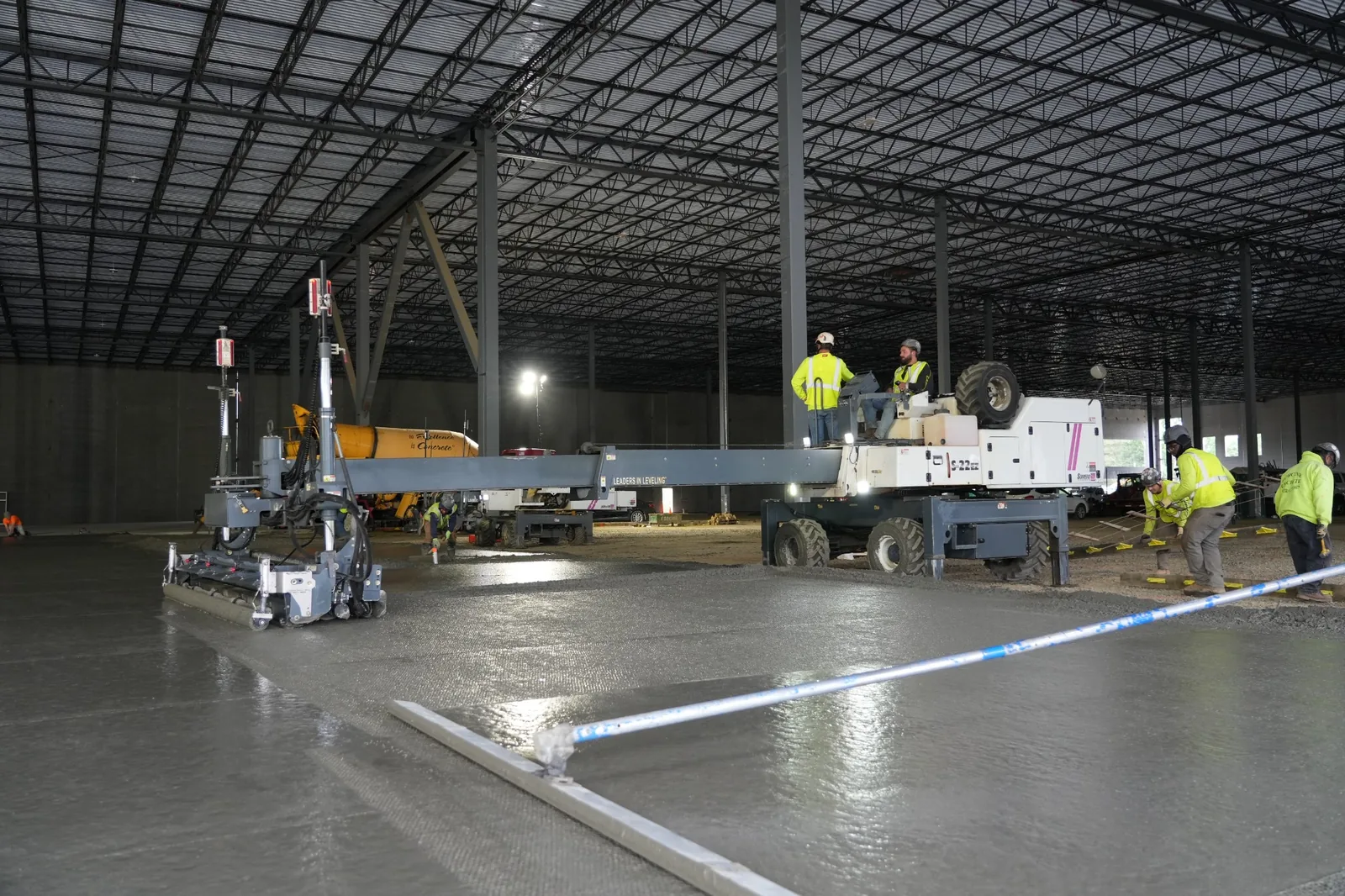
Consider a large warehouse floor. A contractor may place hundreds of cubic yards of concrete in a single pour, with crews working through placement, finishing, and saw-cutting before the project can move forward.
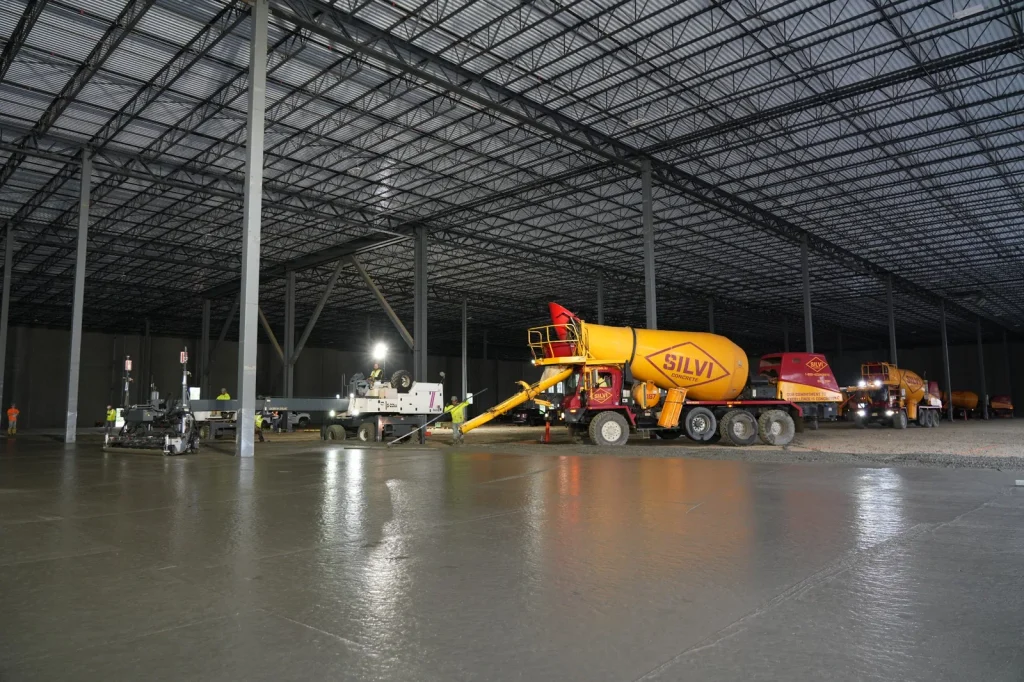
The timing of those activities matters.
Control joints, for example, must be cut within an appropriate window to help manage cracking as the concrete shrinks. Cutting too early can cause raveling, where the edges of the joints chip or break away. Waiting too long can increase the risk of uncontrolled cracking.
For contractors managing large pours, being able to complete saw-cutting within the planned workday rather than returning later can make a meaningful difference in scheduling and labor efficiency.
And while several factors influence when concrete is ready for saw-cutting, cement characteristics are an important part of the equation.
What We’re Hearing from Contractors About Cement Performance
Kelly Ican, National Cement Sales Manager at Silvi Materials, has seen the importance of cement performance reflected in conversations with ready-mix customers and the contractors they serve.
One of the clearest examples involves contractors working with concrete produced using Silvi’s Type I/II low-alkali Portland cement. The benefit is straightforward, but it can make a meaningful difference in how contractors manage their workday.
According to Ican, customers have reported that their contractors are able to place control joints earlier than they had been accustomed to with other cement-based mixes, without experiencing joint-edge raveling when cutting the same day.
Ican has also heard positive feedback from customers supplying large warehouse slab pours, where the concrete’s set time and early performance characteristics helped contractors progress through their work faster and more efficiently.
These observations have become an important part of how he discusses cement quality with prospective customers.
Rather than focusing exclusively on product designations or technical specifications, Ican emphasizes what happens after the cement is incorporated into a concrete mixture and delivered to a jobsite.
For a ready-mix producer, that distinction is important. The cement they purchase ultimately contributes to the experience their customers have with the finished concrete.
Why Cement Products Meeting the Same Specifications Can Perform Differently
Industry standards establish essential requirements for cement quality and performance. But meeting the same specification doesn’t necessarily mean two cement products will behave identically in every concrete mixture.
Cement fineness, chemical composition, and other physical characteristics can influence hydration, setting behavior, and strength development.
Those characteristics interact with the rest of the concrete mixture, including the water-cementitious materials ratio, supplementary cementitious materials, and admixtures. Temperature, curing conditions, and construction practices also affect performance.
That means a change in cement source can sometimes influence how an established concrete mixture behaves, even when the replacement cement meets the same required product specification.
For producers, the practical takeaway is straightforward: cement should be evaluated not only by its classification, but also by how it performs in the mixtures they produce.
Ican points to Silvi’s Type I/II low-alkali Portland cement as an example of a product that has generated positive customer feedback about setting behavior and early performance.
Those observations don’t mean that one cement will outperform another in every application. They do, however, illustrate why understanding product-specific characteristics can be valuable when selecting a cement supplier.
How Cement Performance Can Affect Ready-Mix Producers + Their Customers
For ready-mix producers, cement performance has implications beyond the cost of the raw material.
Consistency Across Concrete Mixtures
Producers depend on predictable material characteristics to maintain consistency across mix designs and projects.
Understanding how a cement behaves can help quality control teams evaluate mixtures, manage variability, and make informed adjustments when necessary.
Contractor Productivity
Concrete producers are ultimately supplying a material that contractors need to place, finish, and work with efficiently.
When a mixture develops the properties needed for subsequent construction activities within an appropriate timeframe, it can help contractors manage labor and scheduling.
For large industrial slabs, that may include the timing of saw-cutting. For other applications, different performance characteristics may be more important.
Customer Confidence
Contractors value concrete that performs consistently from one delivery to the next.
A ready-mix producer that understands the performance characteristics of its cement and can communicate those characteristics effectively is better positioned to address customer questions, troubleshoot concerns, and build long-term relationships.
Precast Production Efficiency
The same considerations extend to precast concrete manufacturers, where early strength development can influence production cycles.
Precast operations often depend on achieving sufficient strength for form removal, handling, and other production activities.
Ican identifies precast manufacturing as another application where cement performance deserves particular attention.
When paired with the appropriate mix design and curing practices, favorable early strength development can support efficient production without compromising required performance.
Looking Beyond Price When Evaluating a Bulk Cement Supplier
Price and supply reliability will always be important considerations when purchasing bulk cement. But they shouldn’t be the only ones.
Ready-mix producers and manufacturers can benefit from understanding how a prospective cement product performs in applications similar to their own.
That evaluation may include reviewing mill test reports, discussing product characteristics with the supplier, and conducting mixture trials when appropriate.
Mill test reports provide information about cement chemistry and physical properties, helping producers evaluate consistency and confirm applicable requirements.
Just as important is working with a supplier that understands the operational challenges facing concrete producers and their customers.
For Ican, conversations about cement selection often begin with understanding the customer’s application and what they need the concrete to accomplish.
A producer supplying warehouse slabs may prioritize different characteristics than a manufacturer producing precast elements. Those differences matter when evaluating materials and developing concrete mixtures.
The Value of Understanding What Happens After Delivery
At Silvi Materials, we understand that cement is only one part of our customers’ operations. But it’s a part that can influence the performance of everything they produce.
Our Type I/II low-alkali Portland cement serves ready-mix producers, precast manufacturers, and contractors across a range of applications, supported by our expanding network of cement import terminals and distribution facilities.
Through ongoing conversations with customers, our sales team gains firsthand insight into how our products perform in real-world applications and what matters most to the people using them.
That feedback helps us better understand our customers’ needs and the role our materials play in their success. Because when evaluating bulk cement, the conversation shouldn’t end with price and specifications, it should also consider what the material helps your customers accomplish.
Learn more about Silvi Materials’ bulk cement products and distribution capabilities, or contact our cement sales team to discuss your operation’s needs.


