
We offer more than 75 crushed stone products available in a variety of colors, sizes, and gradations.
Road Salt vs Table Salt: Why They Look Alike but Act Completely Different
When winter arrives across the Northeast and Mid-Atlantic, thousands of tons of road salt go to work keeping roads, driveways, and walkways safe. But here’s a question we hear all the time: if road salt looks almost exactly like table salt … what’s actually the difference? And could you eat it if you really wanted to?
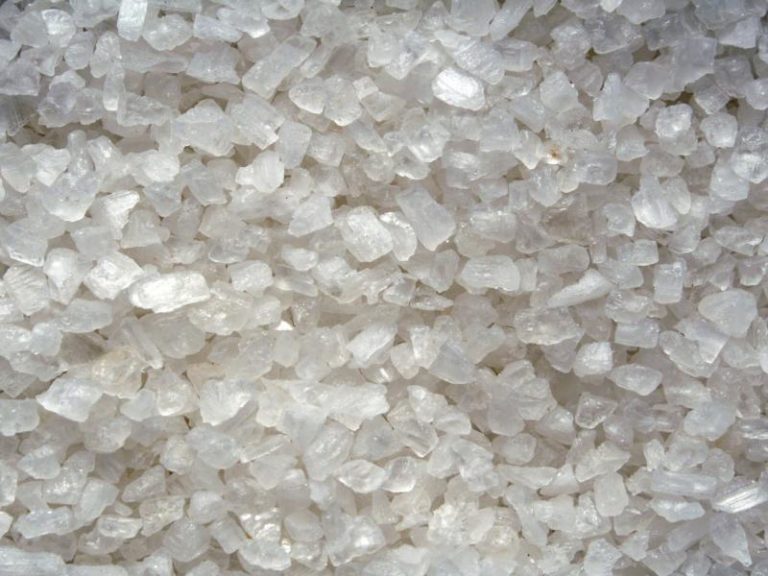
At first glance, the two types of salt look nearly identical. Dig a little deeper, though, and the differences become huge, from purity and processing to additives and chemistry.
This post breaks down what road salt really is, why it works, and why it’s never meant to be eaten, even if the crystals look familiar.
Same Beginning, Completely Different Purpose
Both table salt and road salt come from the same mineral: halite, or sodium chloride (NaCl). That’s where the similarities end.
Table salt is heavily refined. It typically goes through multiple purification steps to remove minerals and insoluble materials. Then it’s standardized for taste, granule size, and safety.
Meanwhile, road salt is processed for performance, not consumption. It’s mined and crushed, then screened to create the right particle sizes for melting ice and improving traction. It retains natural mineral traces because they don’t affect road performance.
If table salt is a gourmet product, road salt is the industrial powerhouse.
Purity and Processing: Why Road Salt Isn’t Food Safe
Road salt can be quite pure as a mineral — often over 99% sodium chloride, depending on the source. For example, Silvi Materials’ road salt boasts 99.11% NaCl, with just 0.66% insoluble mineral matter. But purity alone doesn’t make something edible. Road salt does not undergo the food-grade purification process, which typically includes:
- Chemical purification
- Recrystallization
- Removal of trace minerals
- Testing for heavy metals
- FDA/USDA facility handling standards
Because of this, road salt retains naturally occurring mineral fragments and microscopic insoluble particles; totally fine for pavement, but disqualifying for the dinner table.
Additives + Anti-Caking Agents: Safe for Roads, Not for Eating
To prevent clumping in cold, damp winter weather, road salt is treated with anti-caking agents. Silvi Materials’ rock salt blend includes a trace amount of sodium ferrocyanide, a widely used compound in road-maintenance salt that keeps material flowing and spreadable.
Important distinction:
- Approved for industrial use
- Not approved for human consumption
This is another reason road salt shouldn’t be eaten, not because the additive is dangerous when used properly, but because it’s not regulated for food-grade safety.
How Road Salt Actually Works (It’s Not What Most People Think)
Many people assume road salt “melts” ice. In reality, the science is more interesting. Salt lowers water’s freezing point. This process, known as freezing point depression, prevents ice from forming or reforming, making roads safer to drive and walk on.
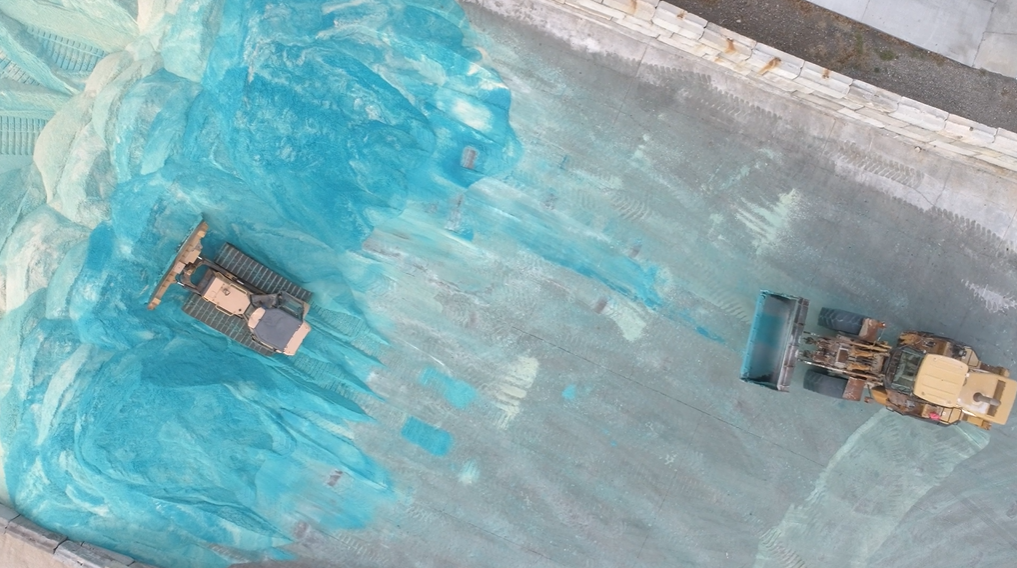
But here’s where things get surprising: salt stops working at very low temperatures. Below about 15–20°F, regular rock salt becomes less effective. At colder temperatures, agencies switch to treated salts or alternative deicers. This is where Silvi Materials’ blue treated salt shines:
- Performs better in extreme cold
- Sticks to surfaces longer
- Easier to see during application
A pop of color goes a long way in winter operations.
So … Could You Eat Road Salt if You Wanted To?
Short answer: No.
Long answer: Still no, but for several specific reasons:
- It’s unpurified. Natural mineral fragments remain.
- It contains additives not intended for ingestion.
- It’s not processed, tested, or certified as food-grade.
Regulatory standards for human consumption are rigorous, and intentionally so.
Road salt is engineered for performance, not nutrition.
Why Understanding These Differences Matters
Road salt is a critical part of winter safety in the Mid-Atlantic and Northeast. The more homeowners, property managers, and contractors understand how it works, when it works best, and why treated blends offer superior performance, the more effective and efficient winter maintenance becomes.
At Silvi Materials, our goal is not just to supply high-quality road salt, it’s to help communities stay safe through the coldest months of the year. Road salt and table salt may start from the same mineral source, but they serve different worlds:
- One belongs in your kitchen.
- The other belongs on your driveway and roadways.
Same look. Same chemical foundation. Entirely different purpose.
If you’re preparing for winter, understanding how road salt works (and the difference between blends) can make all the difference in safety and efficiency.
Want to Learn More?
Explore Silvi’s winter salt solutions including:


