
We offer more than 75 crushed stone products available in a variety of colors, sizes, and gradations.

How Should Bulk Road Salt Be Stored to Prevent Clumping?
Proper bulk road salt storage is essential to prevent clumping and maintain performance throughout the winter season. Bulk road salt should be stored on a paved surface and fully protected from moisture at all times. Covering salt with a waterproof tarp or storing it inside an enclosed structure helps prevent runoff, compaction, and equipment issues.
Why Does Bulk Road Salt Clump?
Road salt clumps primarily because it absorbs moisture. Exposure to rain, snow, or ground water can cause the material to harden over time. Even prolonged sun exposure combined with residual moisture can lead to crusting on the surface of the pile. Common causes of clumping include:
- Direct precipitation (rain or snow)
- Ground moisture seeping into the base of the pile
- Poor drainage around the storage area
- Inadequate tarp coverage
- Extended exposure without pile maintenance
Most bulk salt is delivered free-flowing and treated with anti-caking agents to help prevent compaction. However, once it is delivered, proper storage becomes the responsibility of the customer.
Best Practices for Bulk Road Salt Storage
Whether you are a municipality, contractor, or private operator, the following storage practices help maintain salt quality:
- Store on a paved surface, such as asphalt or concrete, to prevent ground moisture absorption.
- Keep salt fully covered with a waterproof tarp when not actively loading from the pile.
- Use proper drainage around the storage area to prevent standing water.
- Maintain the pile shape, sloping the top to shed water rather than allowing pooling.
- Inspect tarps regularly to ensure they are secure and intact.
- Separate treated and untreated material if both are being stored on site.
When these steps are followed, bulk salt can remain free-flowing and ready for application, even during multi-month storage.

How Long Can Bulk Salt Be Stored?
When properly protected from moisture, bulk road salt can be stored for extended periods, including several months, without performance degradation.
Salt that is kept fully covered and shielded from weather exposure typically remains loose and usable throughout the season. Problems arise not from the material itself, but from exposure to water and poor storage conditions.
For agencies and contractors who stockpile inventory early, proper coverage and containment are critical to maintaining usability and protecting equipment.
Does Treated Salt Store Differently Than Untreated Salt?
Treated salt is bulk sodium chloride that has been treated with magnesium chloride, typically at a rate of 8 gallons per ton, to enhance performance in lower temperatures and reduce bounce and scatter during spreading.
Both treated and untreated salt are commonly treated with anti-caking agents to promote free-flowing performance when loaded into trucks or spreaders. However, even treated material must be protected from moisture once delivered.
Proper storage remains essential regardless of treatment type.
Why Storage Practices Matter to Your Supplier, Too
Responsible salt storage doesn’t only apply at the customer level. Reputable suppliers also manage their stockpiles carefully to maintain product integrity and environmental compliance.
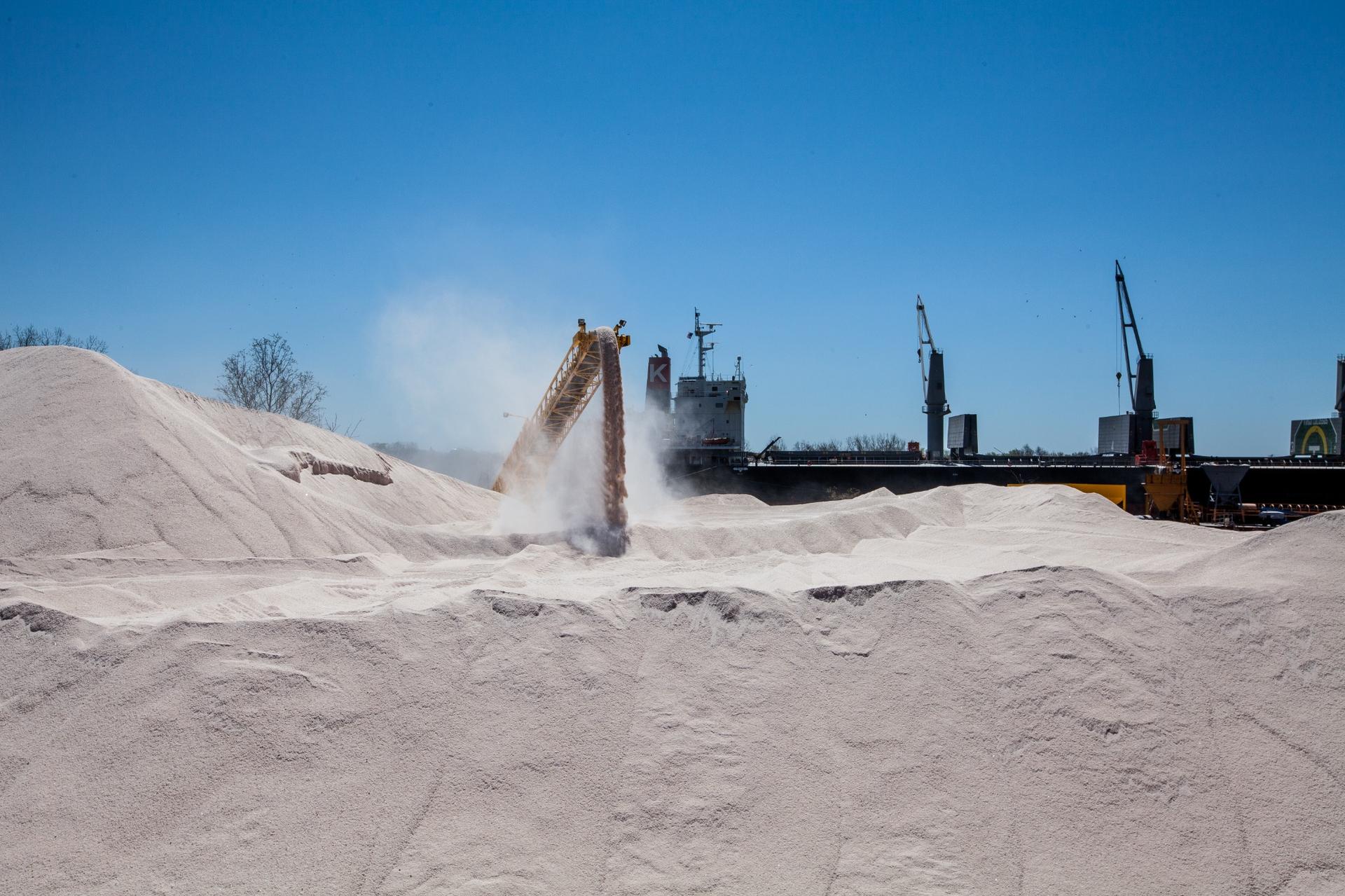
At Silvi Materials’ Bristol terminal, bulk salt is received via deep-water port and managed within controlled stockpile areas. Treated salt is produced to meet DOT standards, including magnesium chloride application rates, and inventory is maintained with containment practices designed to prevent runoff and contamination.
Production capacity and year-round logistics planning also play an important role in ensuring consistent supply during winter months. Reliable suppliers coordinate inventory, treatment, and hauling relationships well before peak storm activity to maintain service continuity.
Proper storage and operational discipline, both at the terminal and at the customer’s site, are what ultimately preserve material performance when conditions demand it most.
Still Managing Inventory This Season?
Late-season weather can still create demand spikes. If you are reviewing your remaining inventory or evaluating pickup and delivery options across Pennsylvania, New Jersey, Delaware, and New York, our salt team can assist with current availability, treatment options, and logistics coordination.
Frequently Asked Questions
Should bulk road salt always be covered?
Yes. Bulk salt should be fully covered with a waterproof tarp or stored inside an enclosed structure to prevent moisture exposure and clumping.
Can bulk salt be stored on dirt?
No. Salt should be stored on asphalt or concrete to prevent ground moisture absorption and runoff issues.
Does treated salt prevent clumping?
Treated salt contains additives that improve performance and spreadability, but it must still be protected from moisture after delivery.
How long does bulk road salt last?
When properly stored and protected from weather exposure, bulk salt can remain usable for several months without losing effectiveness.


